Don’t Memorize the PMBOK® Guide 8th Edition - Understand It

In this episode, Ricardo explains that in the PMBOK® 8th Edition, you do not need to memorize all 40 processes. Many of them are very similar, especially in the planning phase, which alone contains 19 processes. He shows that processes like Plan Scope Management, Plan Schedule Management, Plan Financial Management, and Plan Risk Management follow the same logic: they define the “rules of the game” for each performance domain.


What Happened with the Communication Domain in the PMBOK® Guide 8th Edition?

In this episode, Ricardo discusses a key change in the PMBOK® Guide 8th edition: the relationship between stakeholders and communication. In previous editions, communication was a separate knowledge area, but now it is considered part of stakeholder management. This shift is significant because communication only exists when there are stakeholders with different needs.

My First Impressions about the PMBOK® Guide 8th Edition

In this episode, Ricardo discusses the new edition of PMBOK 8, which brings important changes more aligned with the real work of project managers. Based on nearly 48,000 data points and two rounds of global feedback, it has become more practical, clear, and value-oriented. The old 12 principles have been condensed into six more focused ones, while maintaining good project practices.

Luck, Probability, and Risk: What Is Really Under Your Control in Projects

In this episode, Ricardo discusses the role of luck and probability in project management. He explains that while luck can influence outcomes, it favors those who are prepared. Probability, he says, is not a prediction but a decision-making tool that helps manage uncertainty. Effective project managers turn randomness into results through preparation: identifying risks, creating contingency plans, defining triggers, and building buffers.

Executives Who Don’t Understand Projects Can’t Deliver Results

In this episode, Ricardo explains why executives need to understand the logic of project management to make informed strategic decisions. Projects drive organizational changes, such as digital transformation, new products, entry into new markets, and mergers. Without understanding how projects add value and manage risk, leaders may fail to connect strategy to execution.

The Invisible Loop: Why Your Schedule Never Balances Out

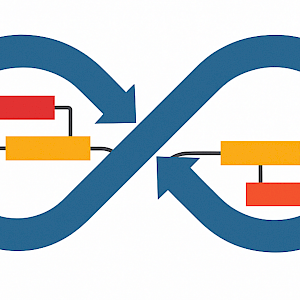
In this episode, Ricardo discusses activity loops, which occur when tasks become predecessors and successors to each other, creating cycles that make schedule calculations difficult. Although schedules are designed for linear flows, engineering and innovation projects are often iterative, with constant revisions and feedback. Looping isn't a mistake, but it needs to be represented correctly.

The Project Didn’t Fail — It Just Revealed the Truth

In this episode, Ricardo explains that projects don’t really fail — they reveal the truth about an organization. Projects act as mirrors, exposing hidden cultural flaws like poor alignment, weak leadership, and political decisions. When pressure from deadlines and budgets increases, the organization’s true nature surfaces: silos, egos, and fear replacing collaboration.

The Truth Behind Fake AI Projects: Understanding AI Washing

In this episode, Ricardo discusses AI washing, a growing trend where organizations falsely claim to use artificial intelligence. Similar to greenwashing, AI washing occurs when companies exaggerate their AI capabilities to attract investors or appear innovative. In reality, many so-called AI systems are just basic automation or rule-based tools.

The Future Has Arrived: The Second Global Research on AI in Project Management

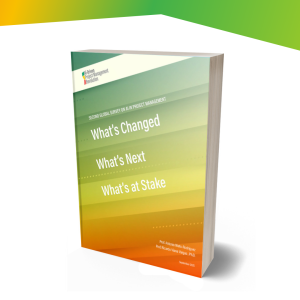
In this episode, Ricardo announces the release of the second global research on AI in project management, co-authored with Antonio Nieto-Rodriguez. Compared to their first study two years ago, AI has moved from experimentation to mainstream adoption. The 2025 report, based on insights from 870 professionals in 97 countries, shows that AI familiarity has doubled, and over two-thirds now use AI tools daily.

The Mega Power of Nano Projects

In this episode, Ricardo introduces the concept of nano projects: ultra-short, highly focused initiatives lasting just a few days, designed to generate value quickly. Unlike megaprojects, which require months or years, nano projects respond to the need for speed and adaptation in a fast-paced world. Examples include testing a marketing channel in five days, redesigning hospital processes in a week, or running rapid pilots in the public sector.

Search in Podcasts
Section Statistics
752
Total Episodes
48
Published in 2025
14,582,492
views (All Episodes)
Last updated at: Dec 01, 2025
About the podcast statistics Starting in December 2020, the podcast total view count includes the views on the website plus the download statistics from Amazon's S3, where the files are hosted, and also statistics generated from applications including Spotify, Apple Podcasts, Soundcloud, etc. that consume the podcast RSS feeds.
Book recommendations

Read Ricardo's reviews of some of the best technical books published.

View recommendations Powered by Goodreads.com logo